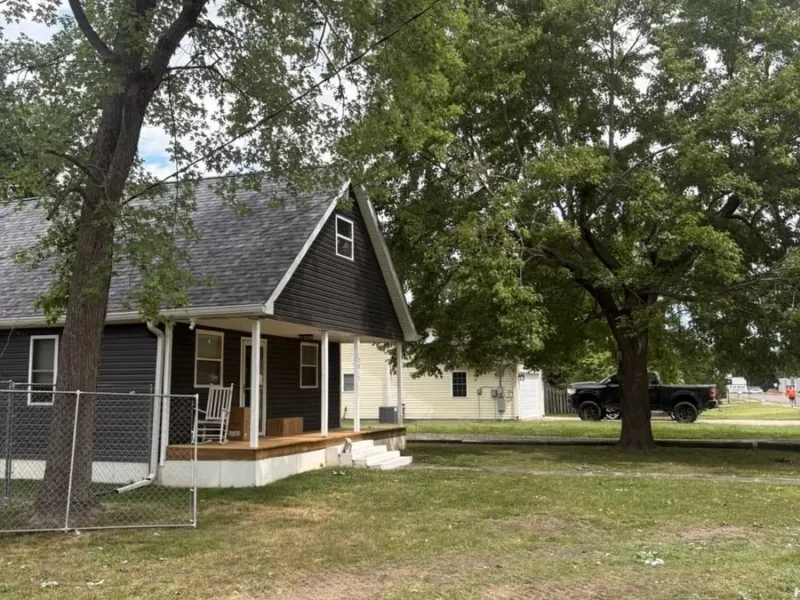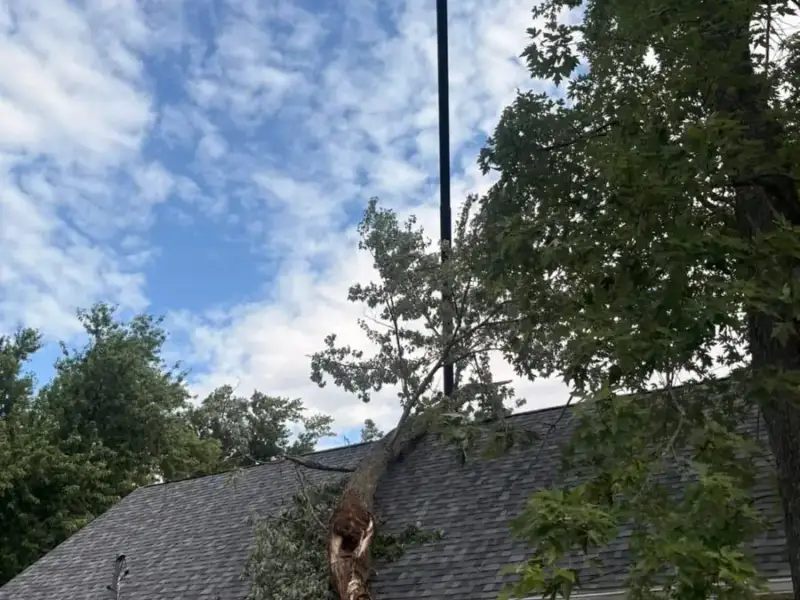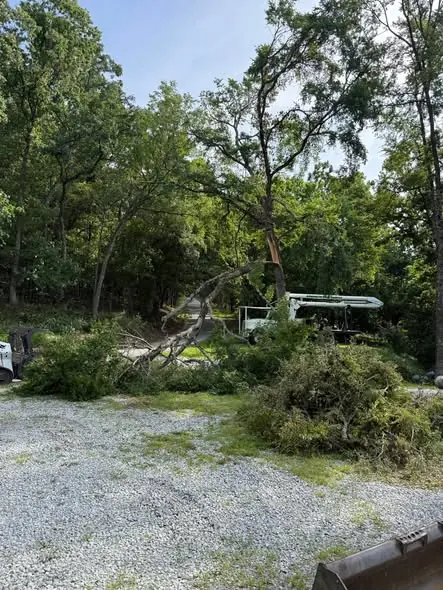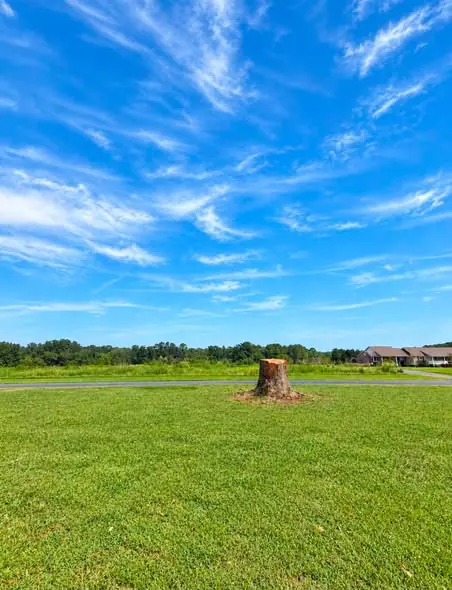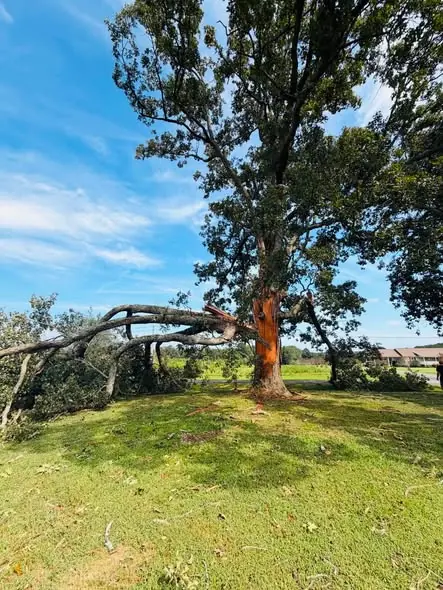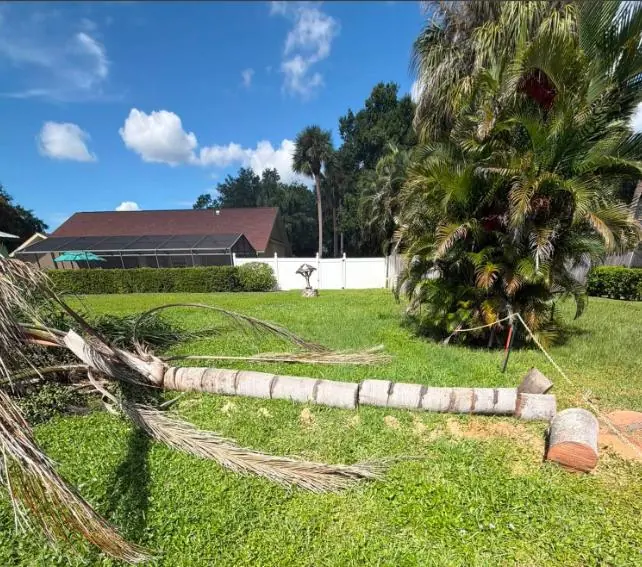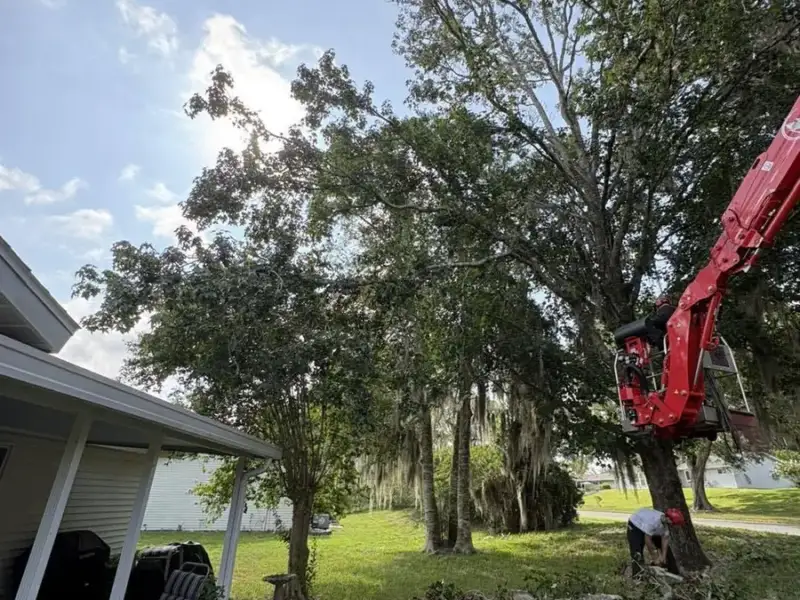
Tampa is full of live oaks that split into two trunks 10 feet off the ground. That V-shaped fork is the weakest point in the tree, and every gust pulls the two halves apart a little more. You can see it start as a crack with bark growing into it. Left alone, one side ends up on the roof. StormGuard Trees cables and braces trees across Tampa so the big oaks you love stay in one piece through storm season.
What cabling and bracing includes
- Inspection of the fork, the trunk, and the limb unions to see if the tree is a good candidate
- Steel or synthetic cables installed high in the canopy between the limbs that need support
- Threaded brace rods through the fork on trees that have already started to split
- Weight reduction pruning on the supported limbs so the cable isn’t doing all the work
- A follow-up inspection schedule
- Full cleanup
Cables versus braces
Cables go high, about two-thirds of the way up the limbs, and they limit how far the limbs can move apart in wind. Brace rods go low, right through the fork, and they hold a crack closed. A tree with a weak but uncracked fork usually just needs cables. A tree that has already split needs rods to pull it together and cables above to keep the load off the repair. We install both on the same tree when it’s needed.
Which trees are worth saving
- A healthy live oak with a tight fork and no rot is the best candidate there is
- A tree that split in a storm but has sound wood on both sides can often be rodded and saved
- A tree with a heavy limb over the house that you don’t want to lose can be cabled to a stronger limb
- A tree with mushrooms at the base, a hollow trunk, or rot in the fork is not a candidate, and we’ll say so
Problems we fix
| Problem | Our fix |
|---|---|
| Live oak fork with included bark starting to crack | Two-cable system above the fork plus a light thin to cut the load |
| Oak that split in Milton but is still standing | Brace rods through the split, cables above, and a check every year |
| Heavy limb reaching over the roof that you want to keep | Cable to the trunk or a stronger limb, with a reduction cut on the tip |
| Multi-trunk laurel oak leaning apart | Cables between all three leaders so they move together |
| Old cable someone installed years ago that’s now cutting into the bark | Removal and replacement with correctly sized hardware |
What the hardware looks like
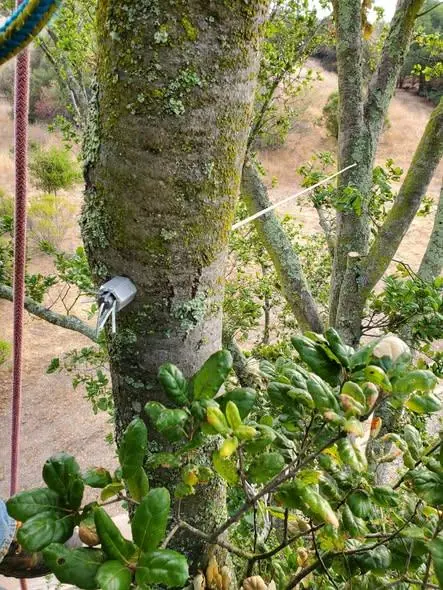
A cable install uses eye bolts or a synthetic sling around the limb and a steel cable rated for the load. The hardware lets the tree grow without being strangled. The cable sits above eye level in the canopy, and most people never notice it. Brace rods are threaded steel run through drilled holes in the fork and bolted at both ends. Everything is sized to the tree.
Cabling and hurricane prep
Cabling is usually part of a bigger plan. We thin the canopy first so there’s less sail, then cable the limbs that are still a concern. On a big oak over a house, that combination is what gets it through a hurricane. We do a lot of this work in spring, before the season starts on June 1.
Why choose StormGuard Trees for cabling
We’d rather save a good tree than cut it down, and we’ll tell you honestly when a tree can’t be saved. Every install comes with a written price and a plan to check it.
Serving Tampa and nearby areas
Tree cabling and bracing across Tampa, South Tampa, Seminole Heights, Temple Terrace, Carrollwood, Lutz, Brandon, and Valrico. Call (813) 498-3737 for a free assessment.