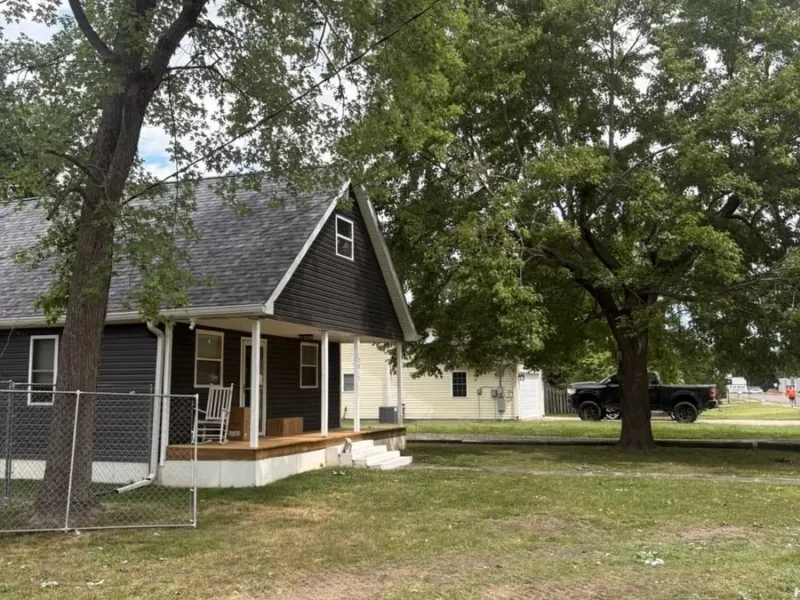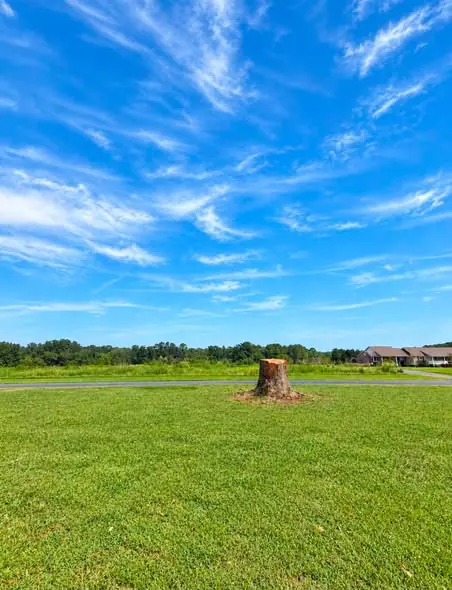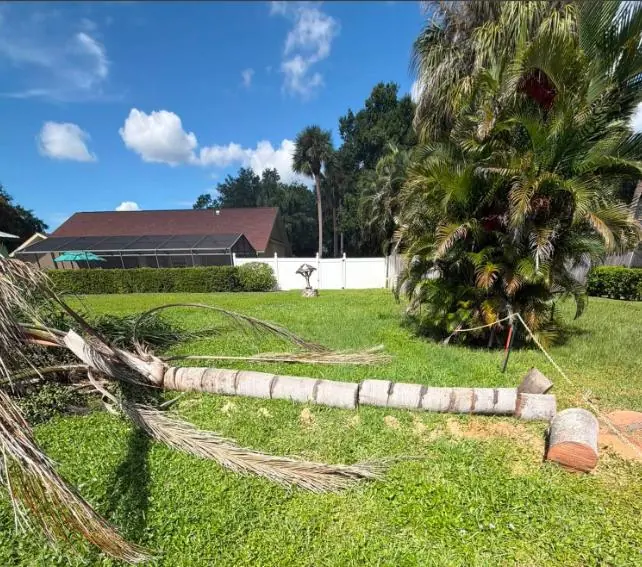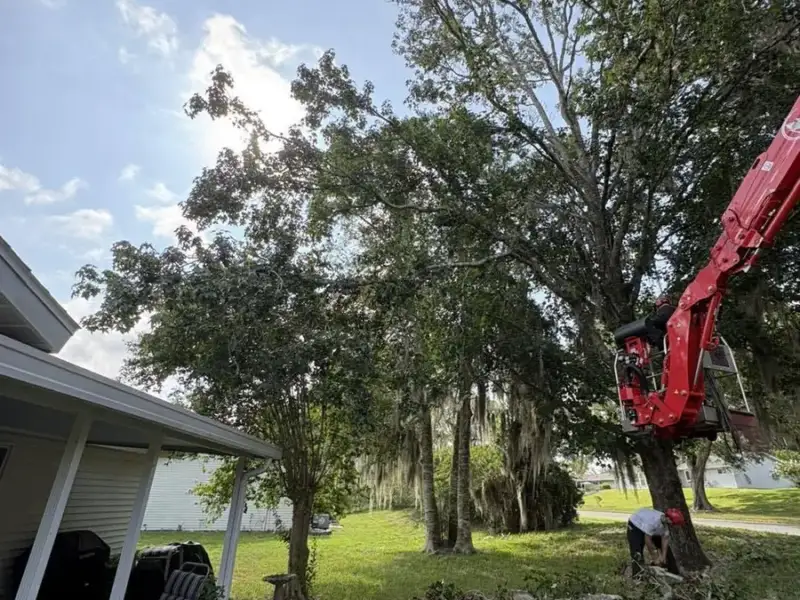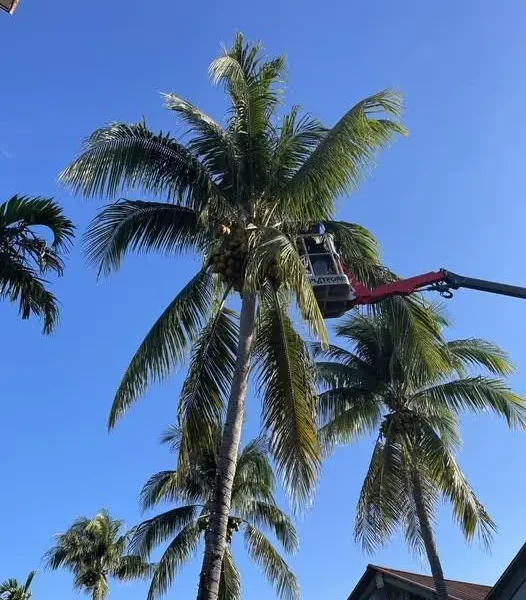
There’s a week every spring in Tampa when everybody remembers what September felt like. That’s the week to call us. Hurricane tree prep is the work StormGuard Trees does before the season so you’re not calling us after it. We thin canopies, take out deadwood, clean palms, and tell you honestly which trees are a risk.
What hurricane tree prep includes
- A walk of the property to check every tree near the house, the pool cage, and the driveway
- Canopy thinning so wind moves through the tree instead of against it
- Removal of dead, cracked, and hanging limbs
- Weight reduction on long limbs over the roof
- Palm cleaning, with coconuts and seed pods removed
- A plain-language list of any tree we think should be cabled or removed
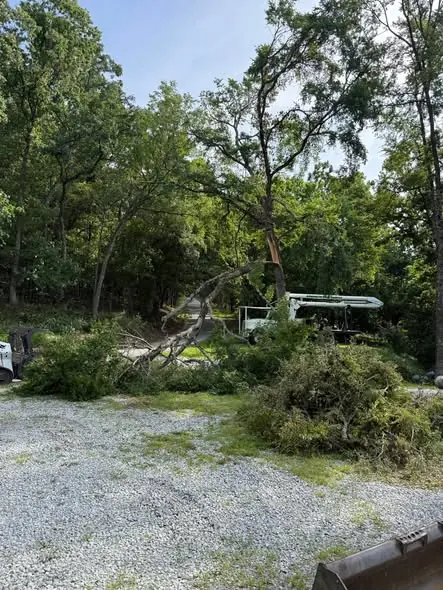
- Full cleanup
Which trees fail in Tampa storms
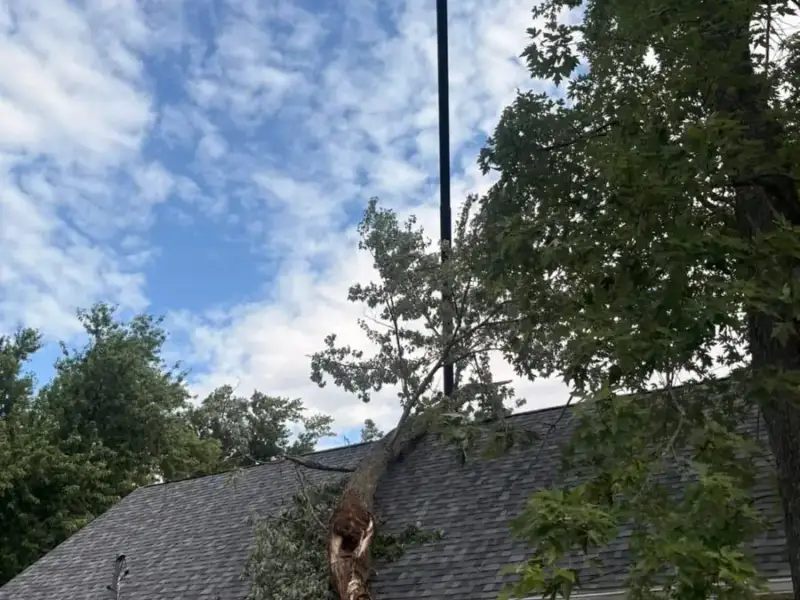
We’ve seen a lot of trees on a lot of roofs. The pattern is clear.
- Laurel oaks and water oaks are fast growers with weak wood and short lives. They’re the number one storm failure in Tampa.
- Live oaks are strong but heavy. When they fail it’s usually a long, untrimmed limb or a tree with root rot.
- Pines snap partway up the trunk, especially if the top is thick and the trunk has old damage.
- Palms that were hurricane cut lose their crowns. Palms trimmed correctly almost never do.
- Trees with cavities, mushrooms at the base, or a fresh lean go down first.
How thinning helps
Picture a bedsheet held up in the wind, then picture the same sheet with holes cut in it. A dense canopy is the full sheet. Every gust pushes on the whole tree and puts all that force on the trunk and roots. Thinning takes out crowded interior branches and shortens the longest limbs. The wind passes through, the load spreads out, and the tree bends instead of breaking. We never remove more than about a quarter of the live canopy, because a stripped tree is as weak as an overgrown one.
Problems we fix
| Problem | Our fix |
|---|---|
| Big laurel oak over the roof with a heavy, lopsided crown | Weight reduction on the house side, deadwood out, and a straight talk about its life span |
| Live oak with a 40-foot limb reaching over the pool | Reduction cut back to a strong lateral, or cabling to a stronger limb |
| Queen palms full of seed pods next to the lanai | Pod and dead frond removal, crown left full |
| Pine that lost its top in the last storm | Inspection of the trunk and removal if the wood is cracked |
| Tree with mushrooms at the base | Root rot check and a removal recommendation if the base is soft |
What we look for during the walk
We check the base of each tree for fungus, soft wood, and soil heaving that points to root problems. We look at the trunk for cracks and cavities. We look at the main limb unions for included bark, the tight V-shaped forks that split under load. And we look at where each tree would land. A questionable tree over the woods is a wait-and-see. The same tree over the bedroom is not.
A note on permits
Inside the City of Tampa, heavy pruning on trees 24 inches or wider at chest height needs a permit. Removal of most trees over 5 inches does too. Hurricane prep trimming usually stays under the line. If a tree needs to come out, we handle the permit or the arborist documentation. See our permit help page.
Why choose StormGuard Trees for hurricane prep
We plan every trim around Florida wind. We’ll tell you which trees are fine, which need work, and which should go. Then we’ll put the price for each in writing so you can decide.
Serving Tampa and nearby areas
Hurricane tree prep across Tampa, South Tampa, Carrollwood, Westchase, Brandon, Riverview, Apollo Beach, and the rest of Tampa Bay. Call (813) 498-3737 before the season does.