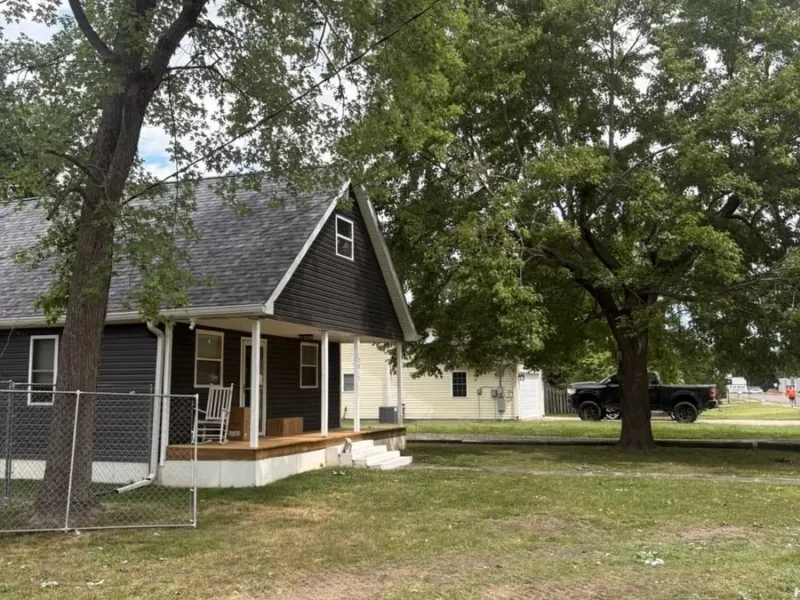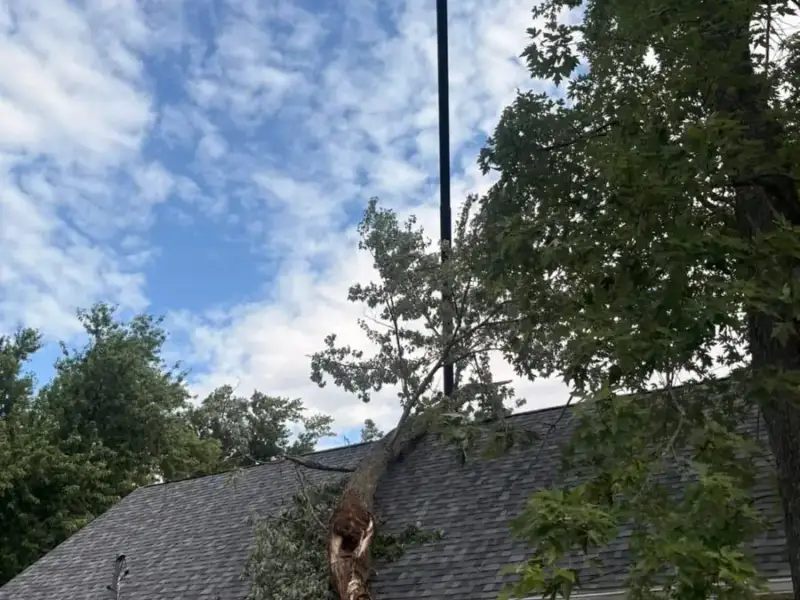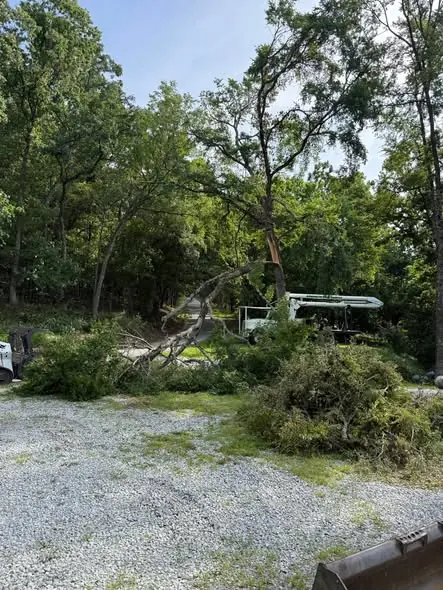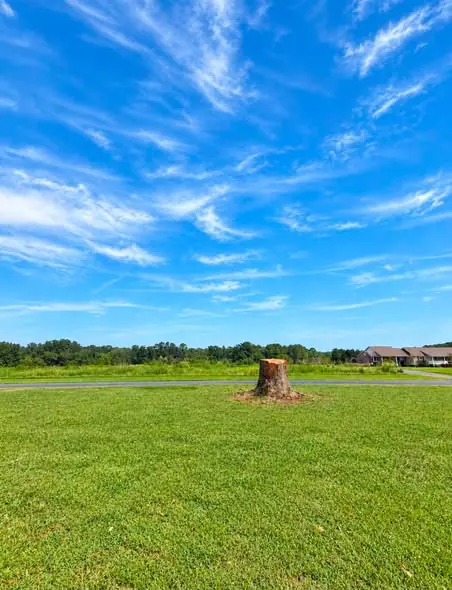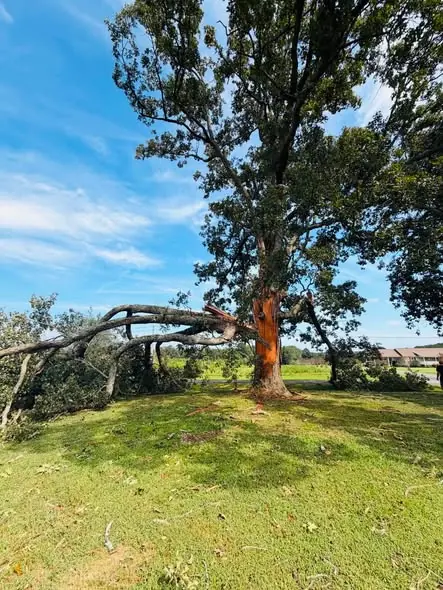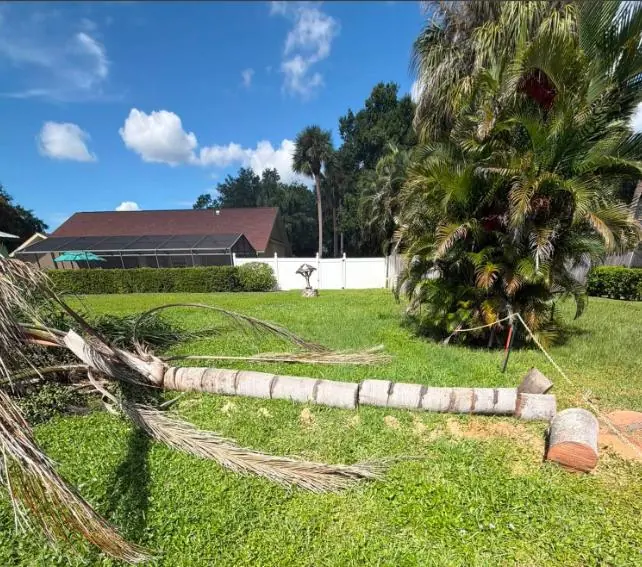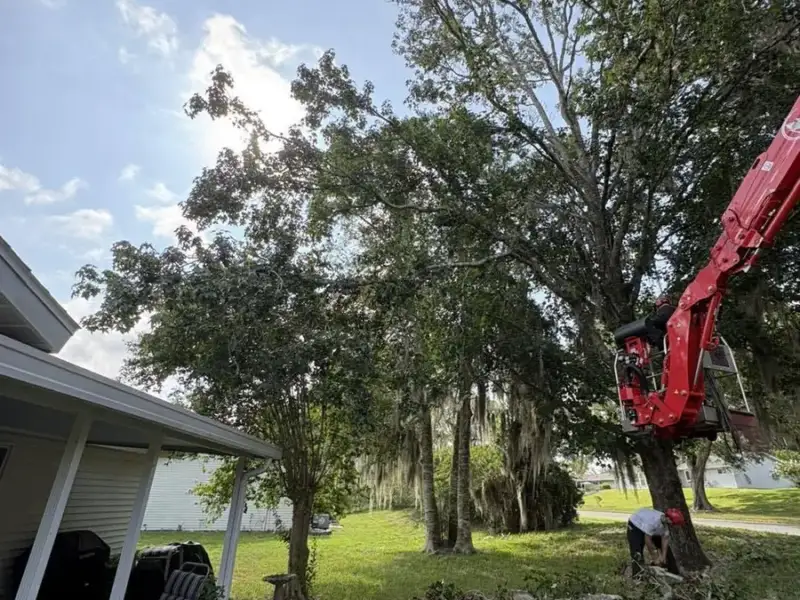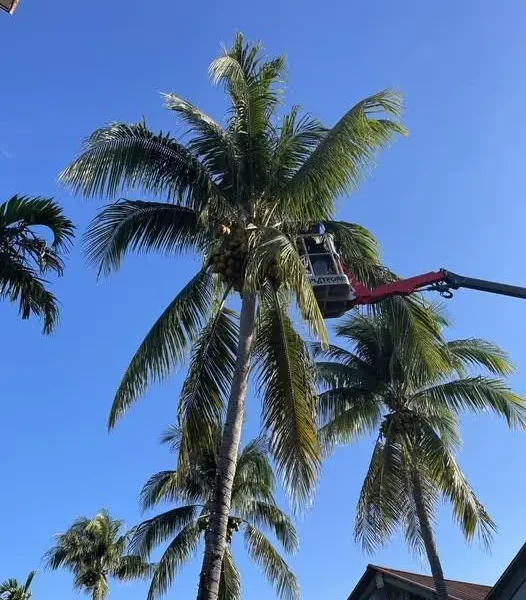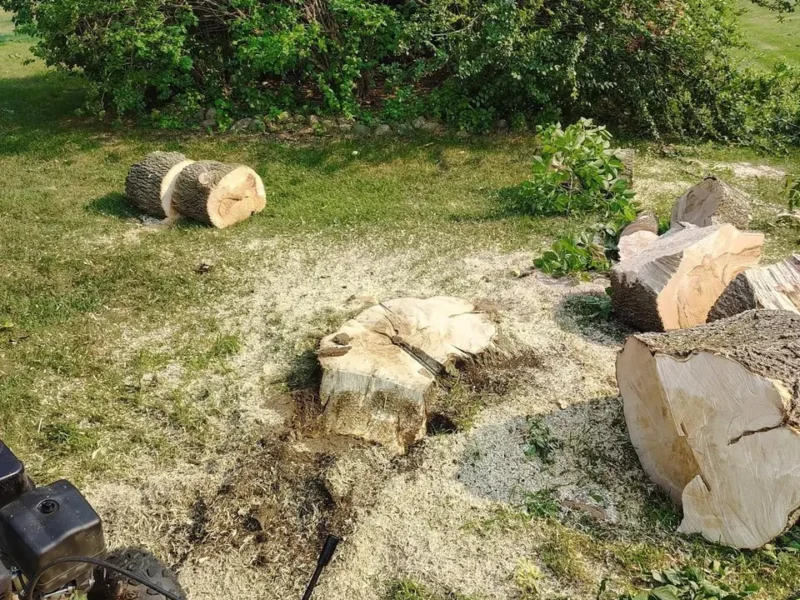
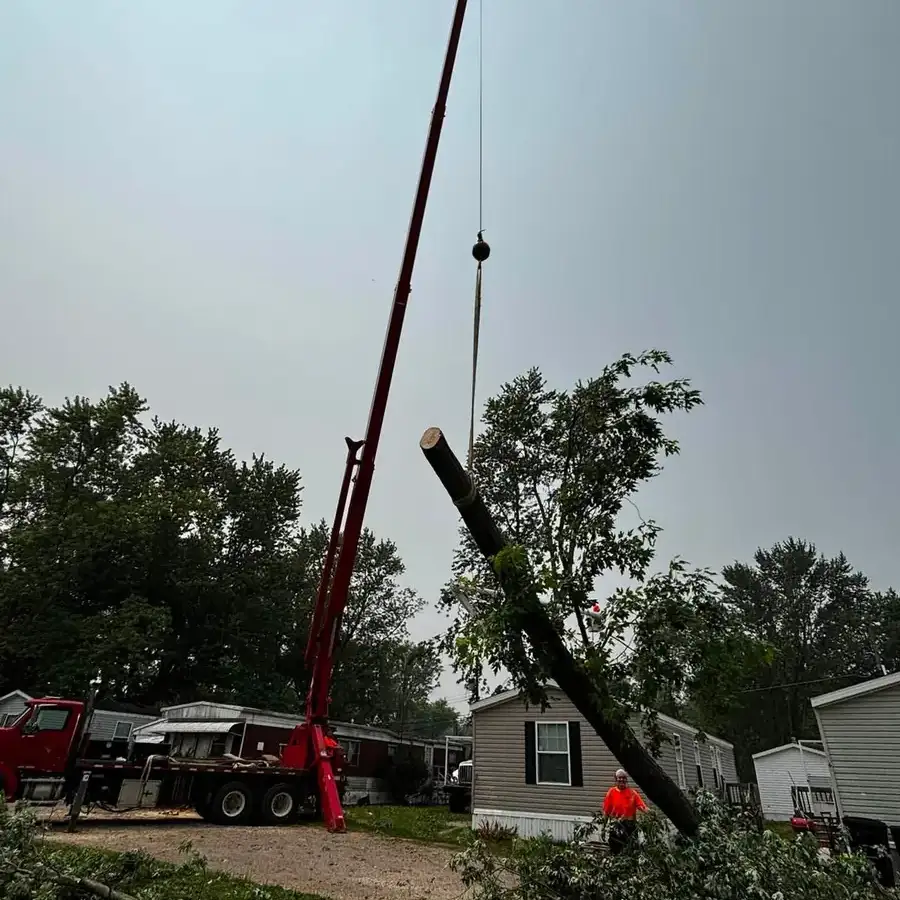
Some trees in Tampa can’t be roped down. The live oak that’s 80 feet tall with limbs over two roofs. The laurel oak lying on top of the house after a storm. The pine between two homes with three feet of space on either side. For those, StormGuard Trees brings a crane. Sections get lifted straight up, swung over the house, and set down in the street where the crew cuts them up. Nothing swings, nothing drops, nothing touches the roof.
What crane tree removal includes
- Site measurement to confirm the crane’s reach and setup spot
- Outrigger pads and mats to protect driveways and lawns
- A climber who rigs each section to the crane hook and makes the cuts
- Sections lifted over the house and lowered to the landing zone
- Trunk removal in large logs
- Street permits and traffic cones when needed
- Full cleanup
When a crane is the right call
- The tree is over the house, the pool cage, or the neighbor’s roof, and there’s no room to lower sections on ropes
- The tree is already on the roof and lifting it off is the only way to avoid more damage
- The tree is very large, and a crane turns a three-day rope job into one day
- The tree is dead or rotten and not safe for a climber to rig from inside the canopy
- There’s no access for a bucket truck but the crane can reach from the street
How a crane removal works
The crane sets up on the street or driveway. Our climber goes up, ties the crane line to the first section, and makes the cut. The crane takes the weight, lifts the piece clear of the canopy, swings it over the house, and lowers it to the ground crew. Then the next section. A big oak might come down in ten to fifteen picks. The trunk goes last in logs the crane can handle. From start to cleanup, most crane jobs are done in a single day.
Problems we fix
| Problem | Our fix |
|---|---|
| 70-foot laurel oak over the house with no landing zone in the yard | Crane picks over the roof to the street, done in a day |
| Storm-fallen oak on the roof | Crane lift of the trunk off the roof first, then removal, then the roof tarped |
| Dead pine too rotten to climb | Crane and a bucket truck so nobody has to trust the trunk |
| Tree in a backyard with a narrow side gate | Long-reach crane from the street, nothing driven through the gate |
| Removal in a South Tampa neighborhood with cars parked on both sides | Street permit, cones, and a tight setup window |
Protecting your property
The heaviest thing on the job is the crane itself. We put outrigger pads under every foot to spread the load, and we mat lawns and pavers when the crane can’t stay on the street. We check for sprinkler lines and septic tanks before setup. The whole point of the crane is that nothing gets damaged, and that includes the driveway.
Crane removal and permits
A big tree usually means a protected tree. Inside the City of Tampa, removal of trees 5 inches or larger needs a permit, and grand trees of 32 inches or more get extra review. Hillsborough County requires a permit for most yard trees of 12 inches or larger. If the tree is a hazard, an ISA certified arborist’s written assessment can clear the way under Florida law. We handle that side of it.
Why choose StormGuard Trees for crane work
We do crane removals regularly in Tampa’s tight neighborhoods, and we plan every pick before the crane arrives. One written price, one day on site, and a yard that looks like the tree was never there.
Serving Tampa and nearby areas
Crane tree removal across Tampa, South Tampa, Seminole Heights, Temple Terrace, Carrollwood, Brandon, and Riverview. Call (813) 498-3737 for a free on-site estimate.